

This article in brief
Yes, it is legal to send a brochure to a home address that was tracked from your website – if the visitor gave permission for location tracking and the brochure is not personally addressed.
If you use our Who Visits My Website software, you can see the address of people who visited your website and what they looked at page-by-page. You will not see their name, email, or phone number – just the address.
Here’s an example:
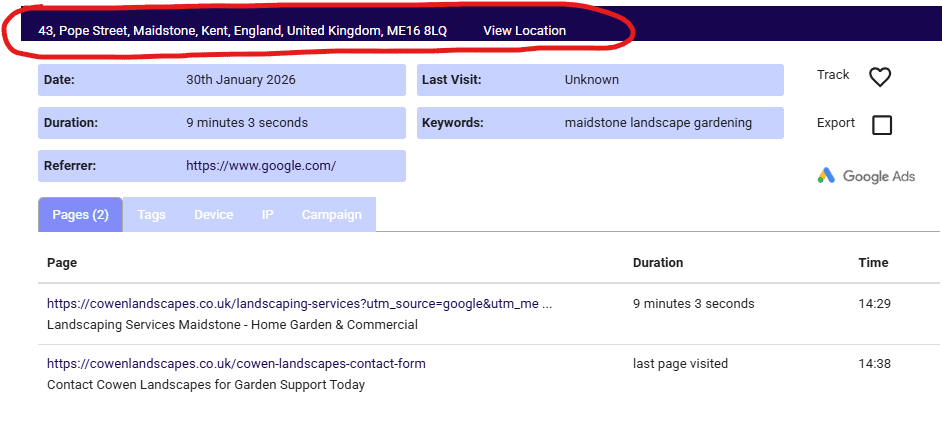
If your brochure is sent to “The Householder”, then it is not classed as personal data marketing under GDPR. You do not need to screen against the Mail Preference Service and do not need additional consent to post.
Here is what this article will help you understand:
- When it is legal to post brochures to home addresses
- What counts as personal data under GDPR
- How Who Visits My Website software gathers address data
- What risks to avoid and how to stay compliant
- Why this is a smart move for local businesses wanting more leads
This is especially useful for anyone selling to homeowners, looking for an edge but staying within regulations.
You can send a brochure to a house if it was tracked with consent
When someone goes to the website of our customers’ who are using our software, they see a pop-up similar to this:
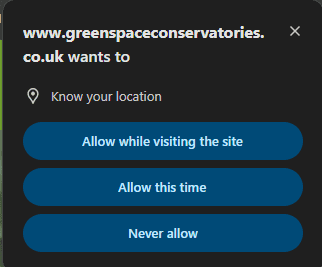
If they click “Allow” on the location tracking pop-up then they have agreed to have their location identified and so you can then send a brochure/information pack to that home – so long as you do not name the individual.
Postal mail that is addressed to:
“The Householder”, “The Occupier”, or even just the house address, without a name …
… is treated as unaddressed marketing mail from a GDPR perspective.
According to current UK GDPR rules, this type of mail is outside the scope of the regulation, because no individual is identified. The ICO has clarified that personal data protection laws only apply where an identifiable individual is being targeted.
So even though you know that address came from a real website visitor, the act of posting a generic brochure to that home does not trigger GDPR enforcement rules – provided you collected the data fairly in the first place.
How Who Visits My Website software gathers residential data – legally
Here is how the software works:
1. You install a small piece of tracking code on your website.
2. Each visitor sees a pop-up asking if they will allow location tracking.
3. If they agree, our system geolocates their device and returns the full residential address (typically within a few metres accuracy).
4. You receive an alert or log into your portal to see who visited and what they viewed.
5. You never get access to the person’s name, contact number, or email – just the address.
This entire process relies on explicit consent. If the user declines tracking or closes the pop-up, their address is not stored and you cannot act on that visit.
However, if they allow location sharing (as 10-30% of people do), the software lawfully stores the residential address under the GDPR principle of freely given and specific consent.
That means when you decide to post a brochure, you are acting on a lawful basis. You have their consent for data collection, and the brochure itself is not addressed to an individual.
This balance keeps you within the law while allowing useful marketing action.
Why GDPR does not apply to unaddressed mail – and what to avoid
A residential address, on its own, is classed as personal data. GDPR applies to the collection and use of that data – but not always to the follow-up.
When you post something to that address generically – and do not try to identify the person who lives there – you are not subject to GDPR’s rules on direct marketing.
Here is what this means in practice:
You do not need to check against the Mail Preference Service (MPS)
You do not need to provide advance opt-out options
You do not need to include GDPR notices in the envelope
You do need to keep a clear record of consent for the tracking that led to the address being known
But there are red lines.
Here is what you must avoid:
- Do not attach a name to that address (from another source like a contact form or sale) and then send personally addressed mail unless you are ready to comply fully with GDPR rules
- Do not combine multiple datasets to try and guess who lives at the address
- Do not keep old address records from visitors who later withdrew consent
The key is this: the legality lies in keeping the data anonymous at the point of posting.
Practical steps for using residential address data safely
If you are using Who Visits My Website software and want to start sending brochures, here is how to do it in a compliant, effective way.
- Send only to consented visitors
You will only ever see address data from people who clicked “Allow” on your website’s location pop-up. Stick to those. - Use generic addressing
Always post to “The Householder” or equivalent. Never use a name. - Keep your tracking records clean
Log consent dates and ensure you have proof of permission if ever challenged. - Be open in your privacy policy
This isn’t compulsory, but you have the option to include a clear note in your website privacy statement that consented tracking may lead to relevant local brochures being sent. - Avoid assumptions
Just because you know what pages they viewed does not mean you should personalise the envelope or try to infer anything sensitive. - Make the brochure useful and non-intrusive
You have one shot to show you are a relevant, local provider who can help – so focus the brochure on value, assurance, and evidence of how you have provided an excellent service to so many other customers.
This approach puts you ahead of many competitors who are guessing or relying on expensive lists. You are acting on real interest, not cold speculation.
Find out more
You can see more about our software on our page about home addresses of people who visited your website, which includes video, examples, the free 30 day trial, and pricing, if choosing to continue after the free trial.